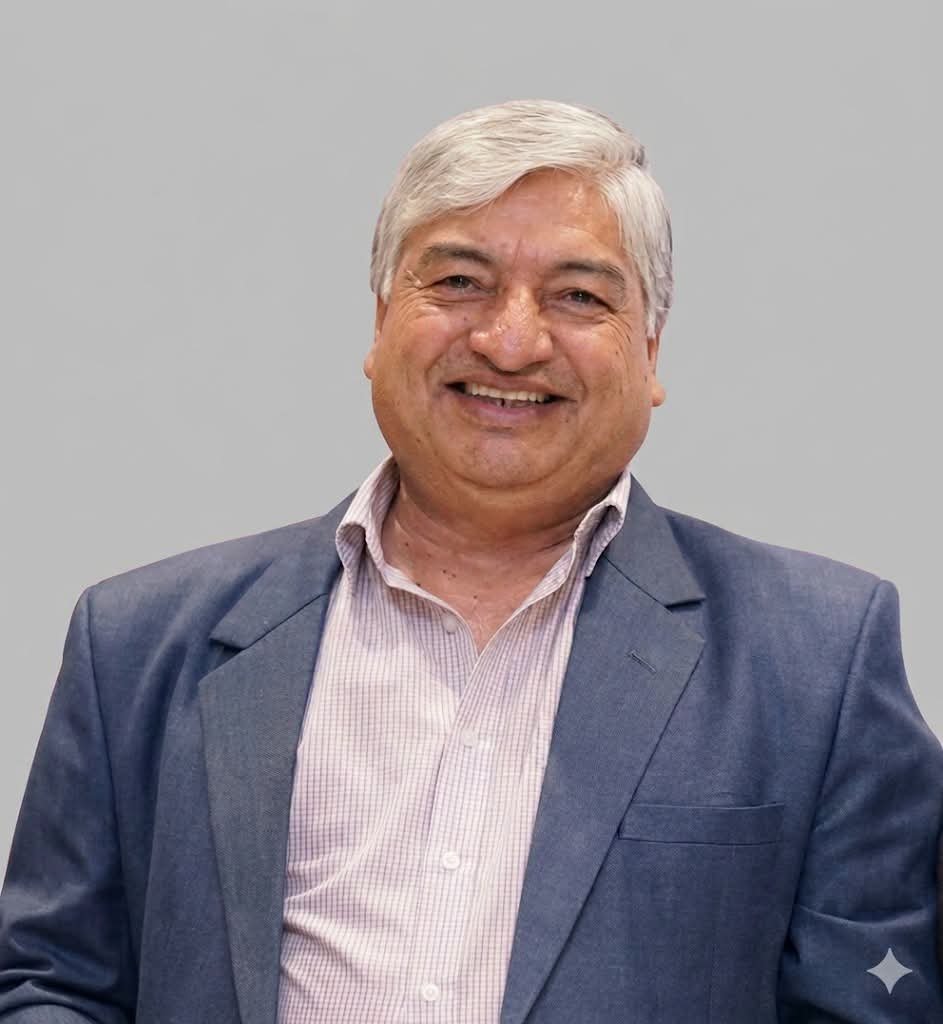
Biography
During the 45 years of professional career, Bishnu Raj Upreti has been deeply engaged in and working on diverse issues related to public policy (teaching, development policy & planning; public policy); conflict and peace, environmental security, human security, conflict induced displacement, conflict impact assessment; security sector reform, transitional justice, internally displaced people, post conflict state building, Bishnu has gained experiences of working at communities, to national and international levels, with governmental, non-governmental, bilateral and multilateral and UN organizations and private sectors.
Bishnu is equipped different participatory qualitative and social research and assessment methodologies experiences of working in multi-disciplinary, multinational, multi-cultural and diverse geographical settings. Bishnu has experiences of working with Nepal’s highest government authorities, extensively engaged in academic institutions and teaching, research in Europe, Americas, and Asia. Bishnu has supervised more than 2 dozen of PhD students from within Nepal and abroad. Bishnu is extensively quoted by national and international media about the armed conflict of Nepal, public policy and state building. Bishnu was immediate past Executive Chairman of the government think tank ‘Policy Research Institute (PRI)’. Bishnu had led the high level expert team on Limpiyadhyura-Lipulekh-Kalapani and Susta border conflict. He has published a) more than 5 dozen national and international peer reviewed journal articles, b) 105 books (written as sole author, editor, and coeditor) and c) hundreds of chapters in books and anthologies.
Bishnu has worked as Principal Investigator, co-investigator, project leader, project co-leader in 42 countries of Latin America, North America, Europe and Asia.
Academic qualifications
| University | Degree, year and discipline/subject |
| Wageningen University, The Netherlands | PhD, 2001, Conflict Management (Resource conflict) |
| Wageningen University, The Netherlands | MSc, 1998, Management of Agricultural Knowledge Systems (Distinction) |
| Tribhuvan University, Nepal | MA, 1994, Sociology |
| IAAS, Tribhuvan University, Nepal | BSc, 1988, Agricultural Economics |
Related work experiences
Employment overview
| S.N. | Employers | Position | Duration | Status |
| 1a | Nepal Centre for Contemporary Research (NCCR) | Research Director | 2023/04 to 2025/12 | Part time |
| 1b | Agriculture and Forestry University | Adjunct Professor | 1014 onward | Part time |
| 1c | School of Arts, Kathmandu University | Visiting Faculty/SR | 2007-2024 | Part time |
| 2 | Policy Research Institute (PRI), a Government think tank, Kathmandu | Executive Chairman | 03/03/2020- 02/03/2023 | Full time |
| 3 | NCCR, Kathmandu | Research Director | 01/11/2016-02/03/2020 | Part time |
| 4 | NCCR, Kathmandu | Executive Director | 01/07/2012 –30/10/2016 | Part time |
| 5 | NCCR North-South, Bern | South Asia Regional Coordinator | 01/11/2005- 20/12/2014 | Part time |
| 6 | School of Arts, Kathmandu University (KU) | Visiting Faculty | 2007 to date | Part time |
| 7 | Agriculture and Forestry University (AFU) | Adjunct Professor | 2014- to date | Part time |
| 8 | School of Management, KU | Visiting Faculty | 2009 to 2013 | Part time |
| 9 | International Alert, London | Director, FFP | 2004-2005 | Part time |
| 10 | IUCN Country Office, Kathmandu, Nepal | Project Coordinator, Environmental Security and Conflict Management | 2003-2004 | Full time |
| 11 | School of Social Science and Public Policy, King’s College London, and Centre for Environmental Strategy, University of Surrey, Guildford, UK | Research Fellow (Social Scientist) | 2000-2003 | Full time |
| 12 | Netherlands Development Organization (SNV), Nepal | Training/Human Resource Development Officer, MHDP | 1991 to 1998 | (study leave included) |
| 13 | Ministry of Water Resources, Government of Nepal | Asst. Agri. Economist | 1989 to 1990 | Full time |
| 14 | Swiss Association for Technical Assistance, Nepal | Junior Technician, (IHDP) | 1980 to 1988 | (study leave included) |
Special Assignment by the Cabinet
Coordinator of the Nepal India Border Study Technical Study Group (2021-22) (in the context of Limpiyadhura, Lipulekh, Kalapani and Susta Disputes), Office of Prime Minister and Council of Ministers and Ministry of Foreign Affairs.
Selected research work and project grants
- 2018-2022: Challenges of municipal solid waste management: Learning from post-crisis governance initiatives in South Asia” (Co-investigator and Nepal Project Leader) with University of Lausanne as lead organization, funded by Swiss National Science Foundation (SNSF).
- 2017: Principal Investigator, Observations and reflections on the peace and constitution- making process in Nepal with Swiss Peace Foundation, Switzerland.
- 2016-2018: Gender Equality, Peace and Security in Nepal and Myanmar (Co-applicant and Nepal Project Leader) with Peace Research Institute Oslo (PRIO) as lead organization, funded by Research Council of Norway.
- 2014-2020: “Feminization, Agricultural Transition and Rural Employment implement at Bolivia, Laos, Nepal and Rwanda (Co-applicant and Project Leader, Nepal Programme), with Centre for Development and Environment (CDE) of University of Bern as lead organization, funded by Swiss National Science Foundation (SNSF)- and SDC under the Research for Development (R4D) program.
- 2012-2014: “Sustainable Land management in the Mountain Regions of Bolivia and Nepal in the Context of Out-Migration, Climate Change and Disaster Risks Reductions”, (Nepal Leader) funded by Swiss Network for International Studies (SNIS).
- 2010-2013: Special Research Project “The role of transnational land investments in rural transformation” (global operation), (co-leader) with Centre for Development and Environment (CDE) of University of Bern.
- 2009-2013: SNSF-SDC- NCCR North-South funded research project “The role of the private sector in peace promotion” (co-leader) (Asia, Africa and Latin America), (Co-applicant and Nepal Programme Coordinator), with Swiss Peace Foundation, Bern.
- 2009-11: Research Project “Landscapes of Democracy: the cultural politics of governance in Nepal’ (co-applicant and Nepal Leader) funded by Social Science and Humanities Research Council of Canada.
- 2011-2016: DFID funded project Secure Livelihoods Research Consortium (Consortium member and Nepal Project Leader) with Overseas Development Institute as lead organization.
- 2012-2015: Making Women Count for Peace: Gender Empowerment and Conflict in South Asia (Nepal Project Leader) with Peace Research Institute Oslo (PRIO).
Related professional activities/services
- 2018 onward: Member of the Nepal Shanti Prathisthan
- 2016 onward: Member of Advisory Board of Nagarik Aawaz,
- 2009 to 2018: Member of Advisory Board of Centre for Unconventional Security Affairs, of University of California, Irvine
- 2014 to 2025, Member of Board of Trustee of the International Foundation for Sciences, Stockholm, Sweden,
- 2019 onward, executive member of Nepal Transition to Peace Institute
- 2003 to date: Resource person, trainer, expert member, advisor, evaluator, and analyst on ‘human security’, ‘unconventional security’, ‘security sector reform’, conflict resolution/ transformation/ management’, ‘transitional justice’, ‘post-conflict reconstruction and development’, ‘peace and conflict impact assessment’, ‘conflict analysis’, ‘management of female ex-combatants’, post-conflict state-building’ for the then Ministry of Peace and Reconstruction of government of Nepal, DFID, DANIDA/Embassy of Denmark in Nepal, Asian Development Bank, European Union, UNDP, WFP, FAO, United Mission Nepal, Safer world, Democratic Control of Armed Forces-Geneva, , SDC, International Alert, Overseas Development Institute (ODI), Peace Research Institute Oslo (PRIO), Swiss Peace Foundation, Wilson Centre-Washington, Centre of Unconventional Security-Irvine, and many other organizations. Further, actively engaged in public policy analysis.
- 2007 to 2017: Programme Committee Member, ‘Conflict management in social and natural resources’, School of Arts, Kathmandu University
- 2012: Programme Committee Chair: Masters in Security Management Course, School of Management, Kathmandu University
- Scientific Advisor: Local Peace Building Research Project of UNDP and Social Science Baha, Nepal
- 2010 onward: PhD Thesis evaluation related to conflict and peace of different universities of Australia, Switzerland, UK and Nepal.
2016-2018: Chair, South Asia School of Rural Reconstruction, Kathmandu.
Teaching and supervision
Graduate courses taught
- DEVS 531: Nepal’s Development Planning and Policies. School of Arts, Kathmandu University.
- IWM 503.3: ‘Conflict in Water Management’ (3 credit points, masters in engineering course), Nepal Engineering College, Kathmandu.
- ‘Contemporary Security Issues’ (3 credit points, masters in security management course), Kathmandu University School of Management (KUSOM), Kathmandu.
- HNRS 521: ‘An Introduction to Management of Social and Resource Conflict’, (3 credit points, masters in Human and natural Resources Studies, School of Arts, Kathmandu University), Kathmandu.
- Development, Governance and Institutions (DES 602) (3 credit points), PhD, Faculty of Agriculture, Agriculture and Forestry University.
- Introduction to Peace (CHS 606) (3 credit points, PhD), Faculty of Agriculture, Agriculture and Forestry University.
- Rural Development and Policy (RDMP30) (3 credit point), South Asian Institute of Technology (SAIT). Kathmandu.
Supervision of PhD students
So far more than one and half dozen national and international students focusing their research on conflict, peace, state building, business and peace, land and natural resources conflict, conflict-induced Internal displacement, conflict, peace and tourism, local democracy governance, violence, reintegration of female ex-combatants, conflict sensitivity commitments of international organizations and their local practices, etc. have been supervised. Similarly, supervised, co-supervised and examined master’s thesis of more than 3 dozen students from different universities of Nepal, Switzerland, Netherlands, UK, Germany and USA.
Reviewer (occasional) of articles of the following journals
Journal of Urban Technology; Pakistan Journal of Agricultural Sciences; Geoforum Journal; Ecological Economics; Mountain Research and Development; Energy Policy; Journal of Peace and Development; Journal of Natural Hazards; International Journal of Commons; Journal of Ethnicity and nationalism; Stability Journal; Journal of victimology, and others,
- 2020-2023: Editor-in-chief: Nepal Public Policy Review (a peer-reviewed journal hosted by Policy Research Institute).
Travel: for official and personal purpose:
103 counties of Asia, Europe, North and South America, Africa. They are: 32 countries form Africa (Algeria, Angola, Benin, Botswana, Burkina Faso, Burundi, Democratic Republic of Central African Republic, Cameroon, Congo, Eritrea, Ethiopia, Ghana, Kenya, Lesotho, Liberia, Mozambique, Namibia, Nigeria, Rwanda, Senegal, Sierra Leone, Somalia, South Africa, Sudan, Tanzania, Togo, Tunisia, Uganda, Zambia, Zimbabwe), 31 countries of Asia (Afghanistan, Bahrain, Bangladesh, Bhutan, Cambodia, China, India, Indonesia, Iran, Iraq, Israel, Japan, Kyrgyzstan, Laos, Malaysia, Maldives, Myanmar, Nepal, Pakistan, Philippines, Qatar, Saudi Arabia, Singapore, South Korea, Sri Lanka, Tajikistan, Thailand, Turkey, United Arab Emirates, Vietnam,), 24 countries of Europe (Austria, Belgium, Bulgaria, Croatia, Czech, Denmark, Finland, France, Germany, Greece, Hungary, Italy, Luxembourg, Netherlands, Norway, Poland, Portugal, Romania, Slovakia, Spain, Sweden, Switzerland, United Kingdom, Vatican City), 8 countries from North America (Canada, Costa Rica, El Salvador, Guatemala, Haiti, Nicaragua, Panama, United States. South America (6): Bolivia, Brazil, Chile, Colombia, Ecuador, Peru) and 4 countries from Oceania (Australia, New Zealand , Papua New Guinea, Fiji),